Escape the Delivery Trap to Reclaim Restaurant Margins and Customer Data
Running a restaurant has never been for the faint of heart, but the specific challenges facing independent owners today are fundamentally different from those of a decade ago. There was a time when great food, a clean dining room, and a smile were enough to guarantee a decent profit margin. Today, you can have a full house and a ringing phone, yet still find yourself barely breaking even at the end of the month. The culprit isn’t usually the quality of your menu or the dedication of your staff; it is a silent erosion of profitability caused by rising operational costs, labor shortages, and the aggressive commission structures of third-party delivery platforms. For many single-location restaurant owners, the realization is setting in that the old way of doing business is no longer sustainable.
To survive and eventually thrive in this new landscape, independent operators must shift their mindset from being purely hospitality-focused to becoming data-driven and operationally efficient. The romantic idea of the proprietor who touches every table is being squeezed out by the reality of the proprietor who is stuck in the back office, trying to reconcile invoices and figure out why a busy Friday night resulted in a loss. The path forward requires reclaiming control over two vital assets that many owners have unknowingly surrendered: their profit margins and their customer data. This guide is designed to walk you through exactly how to modernize your operations without losing the soul of your restaurant.
The hidden cost of convenience and the delivery trap
For the better part of the last few years, third-party delivery apps have positioned themselves as a lifeline for restaurants. On the surface, they appear to be a marketing engine, bringing your menu to customers who might never walk past your storefront. However, this convenience comes at a staggering price. When you rely exclusively on these platforms, you are effectively paying a massive "convenience tax" that can devour up to 30 percent of your gross revenue on every order. For an industry where profit margins often hover between 5 and 10 percent, this math simply does not work in the long run. You end up doing all the work—sourcing ingredients, cooking, packaging, and cleaning—while a tech company takes the lion’s share of the profit just for facilitating the transaction.
Beyond the immediate financial hit, there is a secondary, more insidious cost: the loss of the customer relationship. When a patron orders your signature burger through a third-party app, they are not technically your customer; they are the app's customer. You do not get their email address, their phone number, or data on their ordering habits. This means you cannot market to them directly, offer them loyalty rewards, or encourage them to return without paying the platform again to reach them. You are effectively renting access to your own diners. Breaking this cycle requires building a direct channel where you own the transaction from start to finish. This doesn't mean you must abandon delivery apps entirely, but it does mean you must stop viewing them as your primary partner and start treating them as a supplementary marketing channel while you aggressively drive traffic to your own systems.
Automating the front of house to save labor and sanity
Once you have identified the need to reduce reliance on third-party commissions, the next logical hurdle is labor. Finding reliable staff has become one of the single greatest stressors for independent owners. Wages are rising, turnover is high, and the sheer logistical headache of managing a large front-of-house team can distract you from the bigger picture of business growth. This is where modern technology stops being a luxury and becomes a survival tool. The goal is not to replace human hospitality with robots, but to automate the transactional parts of service so your actual humans can focus on the guest experience.
This is the precise moment where implementing a solution like the [MyShop Technologies Kiosks and Order Management System](MyShop Technologies Kiosks and Order Management System) changes the trajectory of a business. By installing self-ordering kiosks, you immediately alleviate the pressure on your counter staff. Instead of having one or two employees tethered to the register, desperately trying to hear orders over the dining room noise and manually entering them into a POS, the kiosk handles the transaction with perfect accuracy. This system doesn't call in sick, it doesn't get overwhelmed during the lunch rush, and it never forgets to upsell.
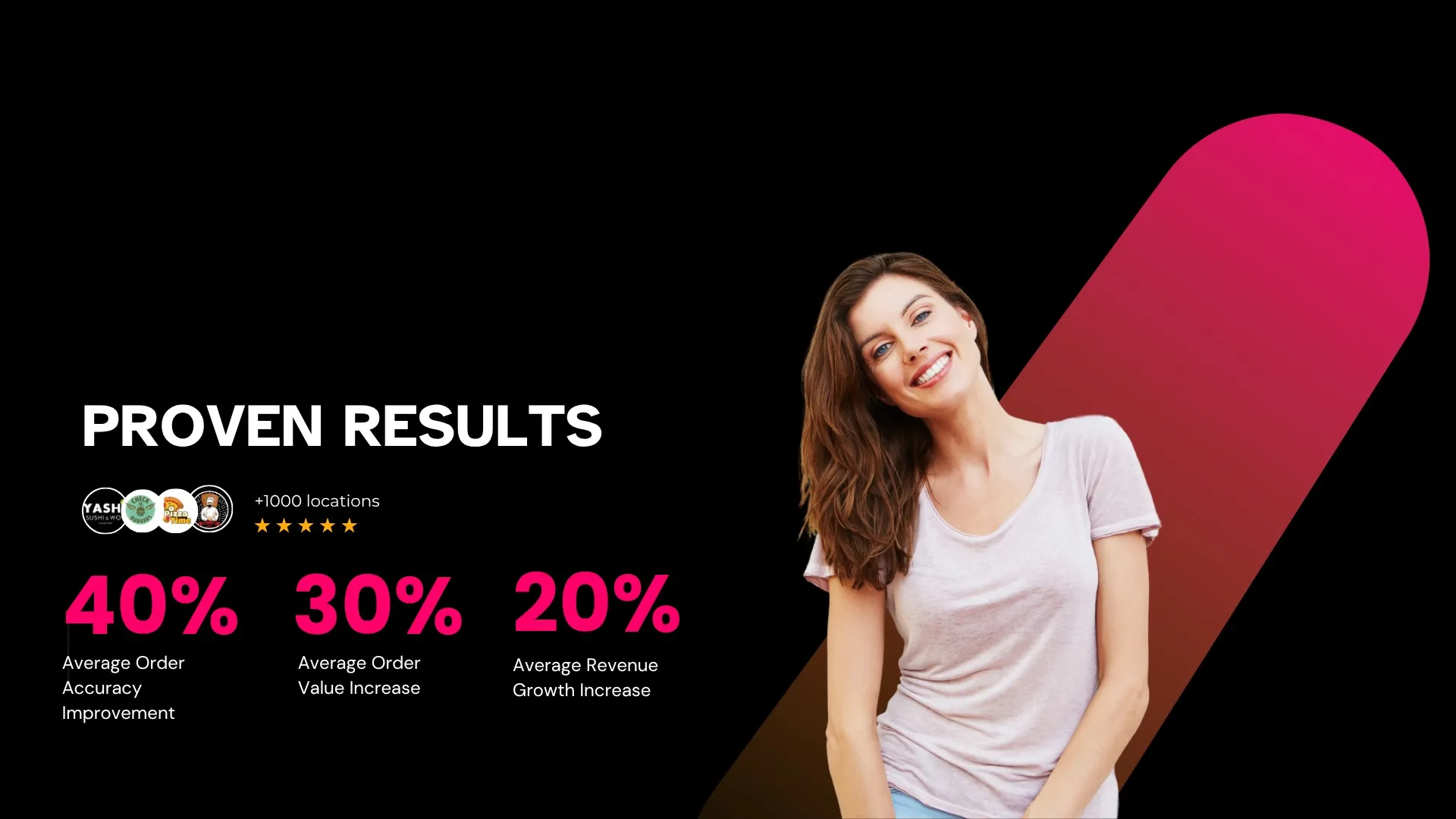
When you utilize the [MyShop Technologies Kiosks and Order Management System](MyShop Technologies Kiosks and Order Management System), you are essentially cloning your best cashier. These systems are programmed to consistently offer add-ons—extra cheese, a drink upgrade, or a dessert—in a way that human staff often feel too awkward or too rushed to do. The result is an almost immediate increase in average ticket size. Furthermore, the integrated AI voice ordering capabilities can manage phone orders, ensuring that you never miss a sale because your staff was too busy to pick up the receiver. This technology consolidates all your ordering channels into one streamlined flow, reducing chaos in the kitchen and ensuring that whether an order comes from a kiosk, a phone call, or your website, it is managed efficiently and without the hefty commission fees of external aggregators.
Leveraging data to build a loyal community
The true power of regaining control over your ordering process lies in what happens after the sale. In the traditional model, a customer walks in, pays cash or swipes a card, eats, and leaves. Unless you recognize their face, you know nothing about them. In the digital-first model facilitated by direct ordering systems, every transaction is a data point that helps you build a business asset. When customers order through your branded interface, you collect the insights necessary to turn a one-time visitor into a regular.
Owning your data allows you to deploy marketing strategies that were previously reserved for big chains with massive budgets. You can identify who hasn't visited in the last thirty days and send them a targeted "We Miss You" coupon. You can see who your top spenders are and invite them to a special tasting event. You can track which menu items are driving the most loyalty and which are merely taking up inventory space. This level of granularity transforms marketing from a guessing game into a calculated revenue generator.
Most independent owners simply do not have the time to be full-time marketers. They need systems that run on autopilot. By centralizing your operations, you create a feedback loop where the technology does the heavy lifting. The kiosk captures the data, the order management system organizes it, and you can then use that information to drive direct orders, bypassing the third-party gatekeepers. This restores the direct connection between the kitchen and the community, allowing you to build a brand that stands on its own two feet rather than leaning on a delivery app crutch.
Here is a sequence of steps to help you transition from a manual, high-commission model to a streamlined, automated operation:
- Audit your current commission losses: Look at your P&L statement for the last six months and calculate exactly how much money has gone to third-party delivery fees; seeing this number in black and white is usually the motivation needed to make a change.
- Optimize your menu for digital ordering: Simplify your offerings to ensure they travel well and are easy to navigate on a screen, focusing on high-margin items that can be easily customized with add-ons.
- Implement direct ordering infrastructure: Install self-service kiosks and set up a direct online ordering link on your website and social media profiles to give customers a friction-free way to support you directly.
- Train your staff on the new workflow: Shift your team’s focus from taking orders to expediting food and engaging with guests, ensuring they understand how the technology makes their jobs easier and increases the tip pool through higher volume.
- Launch a data-capture campaign: Incentivize customers to use your new system by offering a small discount or a free item for their first direct order, ensuring you capture their contact information for future marketing.
Regaining your time and your margins
The shift toward automation and data ownership is not about removing the human element from the restaurant industry; it is about protecting it. When an owner is stressed about payroll, angry about commission fees, and exhausted from covering shifts for absent employees, the quality of the food and the atmosphere suffers. By stabilizing the operational foundation with the right tools, you buy yourself the freedom to focus on what actually matters: the quality of the product and the vision of the restaurant.
It is a difficult realization to accept that hard work alone is no longer the currency of success in the restaurant world. Smart work, leveraged by technology, is the new standard. The independent restaurants that will survive the next decade are the ones that refuse to be bled dry by fees and refuse to be held hostage by labor shortages. They are the ones who embrace the tools that allow them to scale their efficiency without scaling their costs.
Taking back control of your restaurant starts with a single decision to modernize. It is about drawing a line in the sand regarding how much profit you are willing to give away and how much chaos you are willing to tolerate. With the [MyShop Technologies Kiosks and Order Management System](MyShop Technologies Kiosks and Order Management System), you are not just buying hardware; you are investing in an infrastructure that defends your margins and secures your future. The technology exists to level the playing field between the local diner and the global franchise. The only variable remaining is how quickly you choose to adopt it.
Schedule a complimentary consultation today to analyze your current setup and discover how much revenue you could reclaim.